AdiosCoyotes
Purpose and how it works:
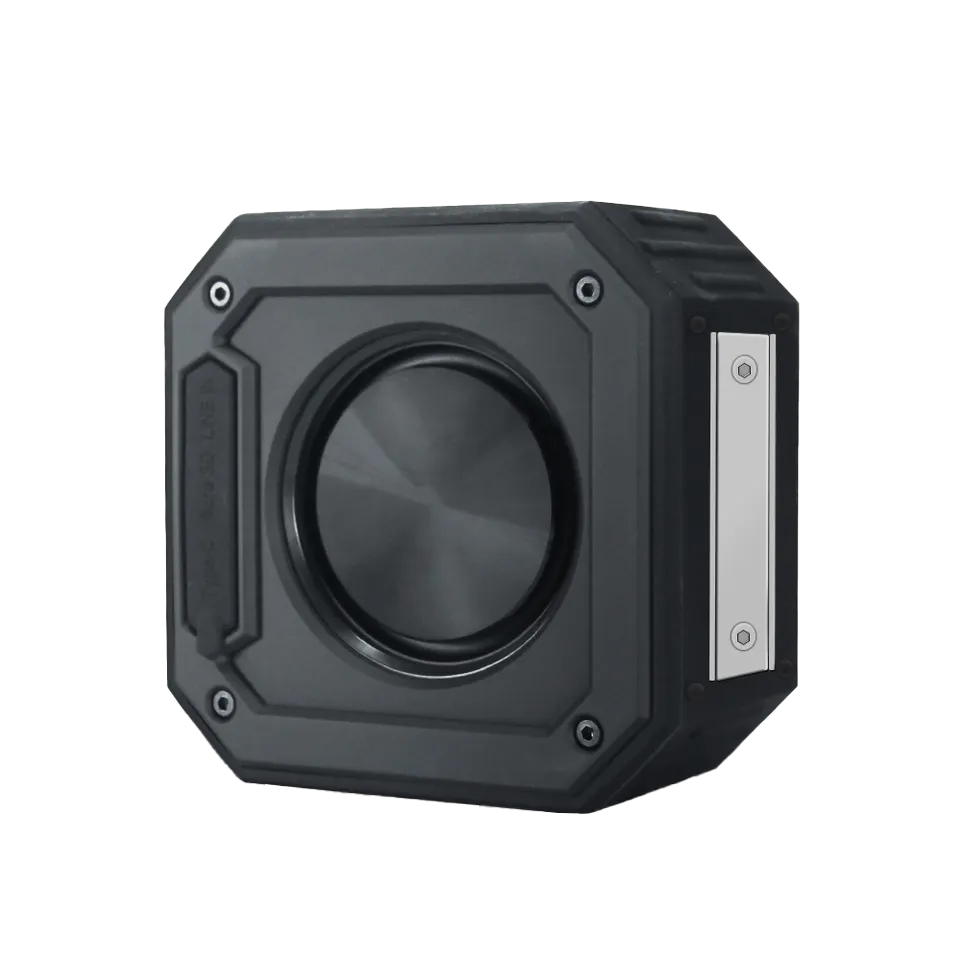
Attempts to scare coyotes away from the vicinity, not just your local yard, by periodically emitting a mountain lion scream, similar to the Run Coyote Run product. The difference is that the AdiosCoyotes unit plays a digital file stored on memory card in an integrated waterproof speaker instead of from a CD. This eliminates the need to provide a CD player, amplifier, and speakers, plus figuring out how to waterproof the unit, and then having to be near an electrical outlet. The AdiosCoyotes unit is self-contained, waterproof, uses extremely low power and runs off a large internal battery. The unit can be connected to a solar panel, minimizing the need to periodically recharge the internal battery, making the unit capable of being installed in more locations.
Additionally, the memory card can be exchanged with other memory cards giving the unit flexibility. For example, a card with wolves howling is available instead of the mountain lion scream and can be used occasionally to ensure that coyotes and other intruders do not want to live nearby. Other memory cards to repel deer, javalina, or feral pigs are being developed.
Pros:
Like the Run Coyote Run CD, the AdiosCoyotes unit appears to be effective at convincing coyotes and other unwanted intruders that they should not stay in the neighborhood, not just where the unit is installed. It appears that the coyote pack vacates the local area and are not seen or heard again as long as the unit is being used. There are multiple testimonials stating that their coyote problems have gone away when using this deterrent.
Consuming low power, this unit can work 24 hours a day and can be left alone for up to 2 days before needing to be recharged. A solar charger can be added at any location minimizing periodic recharging. An additional feature is that it can be taken along when camping to help protect the campground.
Cons:
The main drawback to AdiosCoyotes is that the unit must be recharged every 1-2 days. This issue can be minimized by adding a solar charger. Future models of this product may include built-in solar cells to extend the time before the unit needs to recharged.
Cost.:
The device costs $129 plus shipping.
Conclusion:
The unit is easy to use, appears to work as advertised, and appears to humanely eliminate a coyote problem.
Competitors
-
CoyoteVest purpose and how it works:
Protects pets during a coyote attack by having the pet wear a protective vest covered with spikes and plastic feathers. Possibly deters attack because pet appears strange.
Pros:
There are no reported deaths of pets wearing a CoyoteVest. There are several reported dog attacks by other dogs that have been prevented.
Cons:
The downside of this product is that it does nothing to keep coyotes away from your property, your neighborhood, or your actual pets other than making your pet look somewhat strange. The CoyoteVest is not intended to totally protect your pet – the vest is intended to allow time for a human to come to the pet’s help and rescue. Also, the vest must be used whenever the pet goes outside or its effectiveness will be reduced. Putting the vest on and taking it off each time the pet goes outside can be bothersome.
Price:
Prices range from $110 to $140 for the basic vest depending on model and options chosen, plus $6.00 shipping charge. Other coyote related items are also available such as Whiskers for $20 and spiked collars from $40 to $45.
Conclusion:
The product appears to work as advertised to protect pets during an attack by a coyote or another dog.
Website: www.coyotevest.com
-
Run Coyote Run purpose and how it works:
Attempts to scare coyotes away from the vicinity by playing a CD that periodically emits an amplified mountain lion scream through speakers.
Pros:
The Run Coyote Run CD appears to be effective at convincing coyotes and other unwanted intruders that they should not stay in the neighborhood, not just where the unit is installed. It appears that coyotes vacate the local area and are not seen or heard again. There are multiple testimonials stating that their coyote problems have gone away after installing this deterrent.
Cons:
The principle downside of this deterrent appears to be the fact that it requires a CD player, an amplifier and speakers that can be installed outside with access to an electrical outlet for power. Weatherproofing the CD player, amplifier, speakers and any electrical extension cords necessary can be a challenge.
Price:
The CD price has recently been increased to $49 with free USPS shipping. A CD player, amplifier, and speakers will cost an additional $30 or more. Based on comments from customers, it appears that the CDs last 1-2 years and then must be replaced. The CD player, amplifier, and speaker will need to periodically be replaced because of being outdoors 100% of the time.
Conclusion:
The product appears to work as advertised and appears to humanely eliminate a coyote problem. Its principal negative, in addition to the cost of the system, is the requirement to waterproof the CD player, amplifier, and speakers near an electrical outlet and then replace the various components periodically.
Website: www.RunCoyoteRun.com
-
Nite Guard Solar purpose and how it works:
Attempts to scare coyotes away from the unit by periodically flashing a red light at night. The idea is that the red light is perceived by the coyote as the eyes of another predator so the coyote doesn’t want to get close.
Pros:
The Nite Guard Solar (and similar products) appears to be fairly effective at keeping coyotes away from the protected area. Many thousands have been sold although there are numerous reports of the system not being effective. The Nite Guard Solar may also be effective against many unwanted intruders, not only coyotes, and because it is solar powered, it does not need to have its batteries recharged periodically so it can be mounted anywhere you wish to protect.
Cons:
Like the CoyoteVest, this product does not keep coyotes away from your property or neighborhood; it only works at night and only protects the area around the Nite Guard Solar units themselves. The units must also be mounted at coyote eye level (20-30 inches,) and usually four units are recommended to adequately protect a given area (a cluster mount is suggested containing four units mounted on a short post - see photo above.) In addition, the manufacturer recommends periodically moving the devices to different locations in your yard.
Price:
The Nite Guard Solar sells for $25 per unit and 4+ units are recommended for a total of $100 plus $9.95 shipping charge. The life expectancy is 3 years.
Conclusion:
The product appears to usually work as advertised to protect specific areas where the Nite Guard Solar units are installed.
Websites: www.niteguard.com, predatorguard.com
-
Coyote Rollers purpose and how they works:
Coyote rollers are a barrier system designed to prevent coyotes from jumping over a fence or wall. They consist of a series of rollers that are mounted on the top of a fence or wall, making it difficult for coyotes to gain traction and climb over.
Pros:
There are several benefits to using coyote rollers to protect your property from coyotes. Some of the main benefits include they are relatively easy to install and use, they are humane as they do not harm the coyotes, and they can be an effective deterrent if installed properly.
Cons:
Like any product, there are also some drawbacks to using coyote rollers. Some of the drawbacks include most importantly that they may not work for every coyote. Additionally, they are unattractive and may not be allowed by HOAs, some roller types can be noisy, especially in windy conditions, and they are expensive to protect large yards.
Price:
A Coyote Roller kit including the rollers and mounting hardware starts at $110 for an 8 foot long section. The hardware to protect a 50 foot by 25 foot yard costs $1,300. These amounts are for the hardware only; installation costs are on top of this. A Scottsdale resident recently received a quote of $3,200 to install Coyote Rollers around her one quarter acre property. While Coyote Rollers are usually effective, they are by far the most expensive coyote deterrent.
Conclusion:
The product appears to work as advertised and appears to humanely eliminate a coyote problem. Its principal negative is the cost to purchase and install the system.
Website: www.coyoteroller.com